

Platform architectures
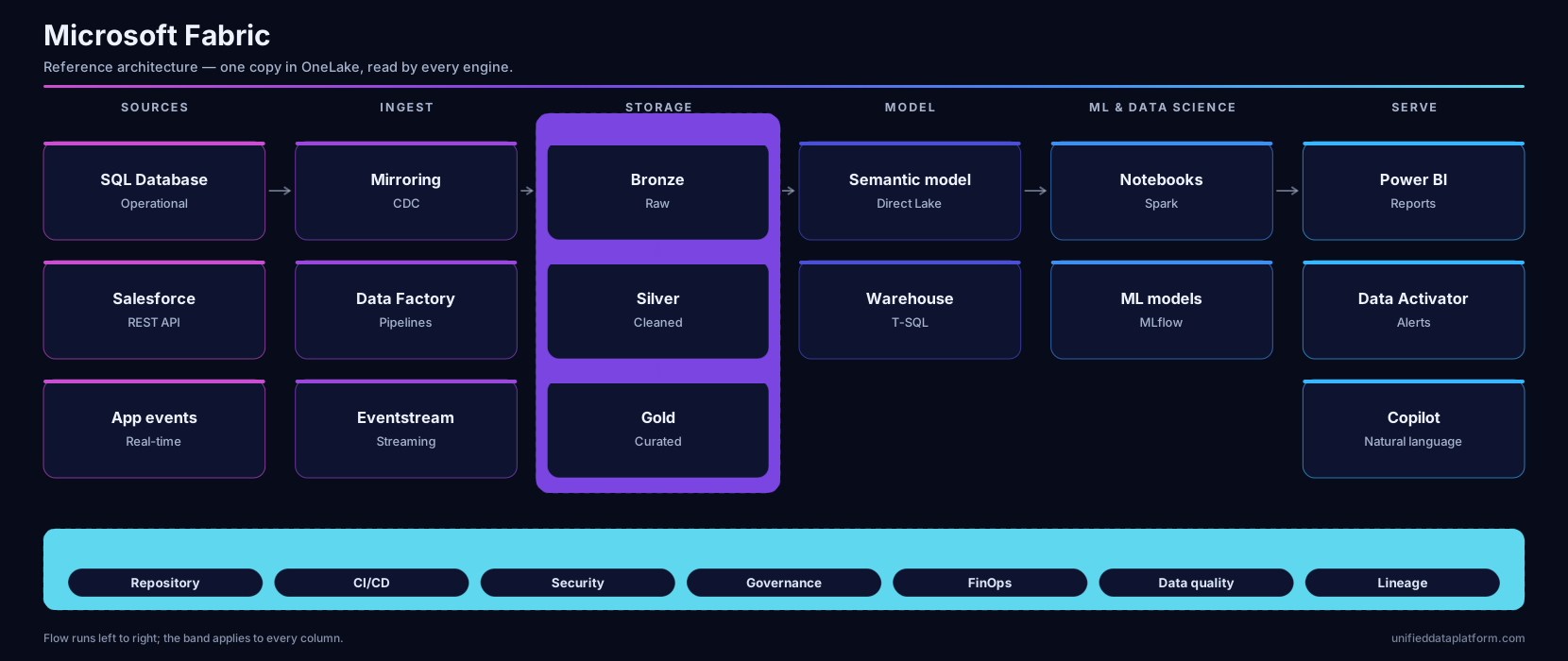
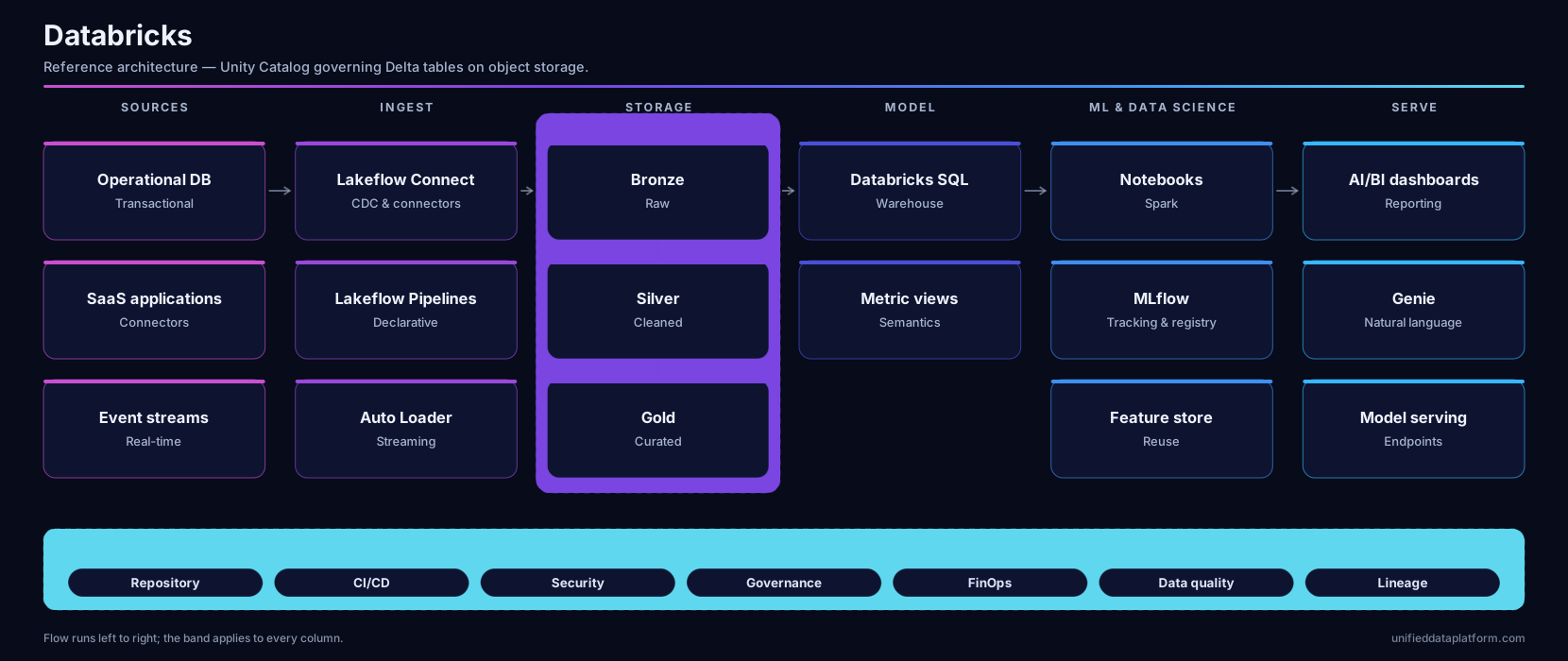
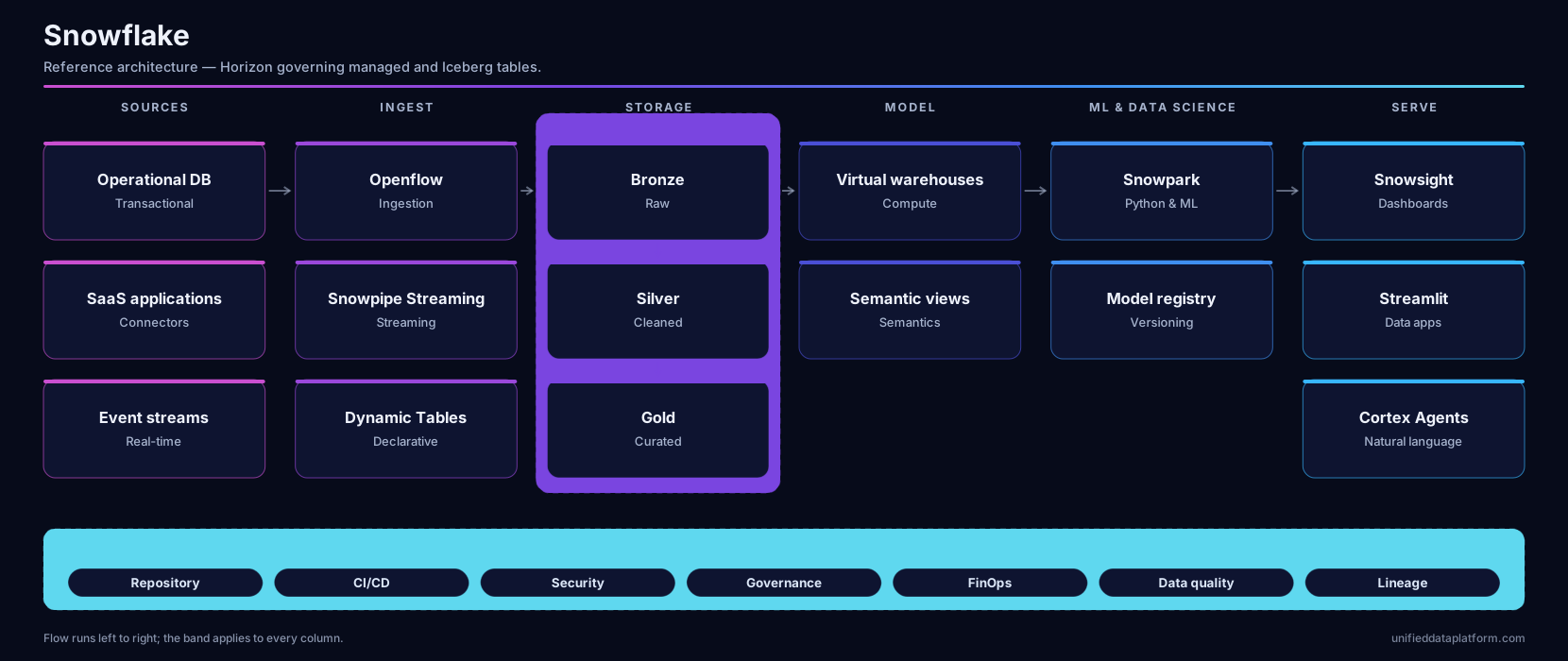
The same six layers drawn three times, so the differences between Microsoft Fabric, Databricks and Snowflake are the only thing that changes.
Every diagram uses the same six layers — sources, ingest, storage, model, ML & data science, serve — and the same band of concerns underneath. That band is drawn across the bottom rather than as a seventh column on purpose: a repository, CI/CD, security, governance, FinOps, data quality and lineage are not a stage data passes through, they apply to every layer at once.
Flow is drawn column to column rather than box to box. Asserting which connector feeds which table, on three platforms at once, is the kind of detail that goes subtly wrong — the platforms’ own documentation is the place for that. Product names were checked against each vendor at the time of writing; tell us if one has moved on.
Microsoft Fabric
One copy in OneLake, read by every engine. Direct Lake lets the semantic model sit on the Gold tables without a separate import.
Databricks
Unity Catalog governs tables, features and models alike, so the same permissions follow a dataset into a notebook and out to a served model.
Snowflake
Horizon governs both managed and Iceberg tables, and compute is sized per virtual warehouse rather than shared across the platform.
Reading them side by side
The columns line up deliberately. Where one platform needs two products to cover a layer and another needs one, that shows as a difference in the same place on the page rather than a difference in drawing style. What the diagrams do not show is how much of each layer you have to assemble yourself, which is the question the definition page is for.